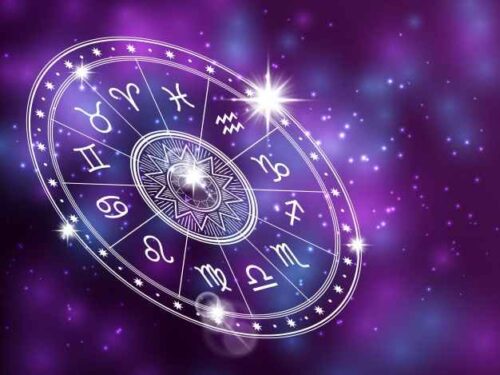
Horoscope Oroscopo
What’s your zodiac sign?”
History of the Horoscope
The horoscope has ancient roots and is deeply connected to the history of civilizations that sought to understand the world and their place in it through the observation of celestial bodies. Here’s an overview of its evolution.
Ancient Origins
- Mesopotamia: The earliest traces of astrology date back to the peoples of Mesopotamia, particularly the Assyrians and Babylonians, around 2,000 BCE. These civilizations practiced a form of astrology that linked celestial events to earthly occurrences, laying the foundation for modern astrology.
- Egypt: The Egyptians also developed an astrological system, integrating their religious and mythological beliefs. The Egyptian calendar, based on lunar and solar cycles, influenced their understanding of time and natural rhythms.
Greek and Roman Astrology
- Greek Astrology: Around 400 BCE, Greek astrology began to flourish with figures such as Eudoxus of Cnidus and Hippocrates, who connected planetary positions to human personality and destiny. The work of Claudius Ptolemy, particularly his “Tetrabiblos,” was instrumental in systematizing astrological knowledge.
- Roman Astrology: With the expansion of the Roman Empire, astrology spread throughout the Mediterranean. The Romans used astrology for political and personal purposes, influencing the culture and society of the time.
The Middle Ages and the Renaissance
- During the Middle Ages, astrology experienced a decline in Europe, but it continued to thrive in the Arab world, where scholars such as Al-Kindi and Al-Biruni translated and expanded upon Greek works.
- In the Renaissance, astrology regained popularity in Europe, fueled by a renewed interest in science and philosophy. Figures such as Giovanni Pico della Mirandola and Nostradamus brought astrology to a wider audience.
Modern Horoscopes
- In the 20th century, astrology took on a new form with the publication of horoscopes in newspapers and magazines. This period saw the rise of a widespread popular astrology culture, making it accessible to the masses.
- Today, the horoscope is a global phenomenon, encompassing various styles and systems, such as Western astrology, Vedic astrology, and Chinese astrology. Horoscopes are often used as tools for self-reflection and personal guidance.
The horoscope has a rich and complex history that spans cultures and centuries. From ancient systems of divination to modern personal guides, astrology continues to influence how many people view the world and face life’s challenges. Whether seen as a science, an art, or simple entertainment, the horoscope remains a fascinating part of human culture.